

When Stylelint is a good fit
- You maintain shared CSS/Sass/Less across multiple extension surfaces.
- You want style-quality checks before pull requests merge.
- You need consistent stylesheet conventions in team workflows.
Stylelint capabilities
Template examples
Stylelint configuration template
Preconfigured setup for style linting.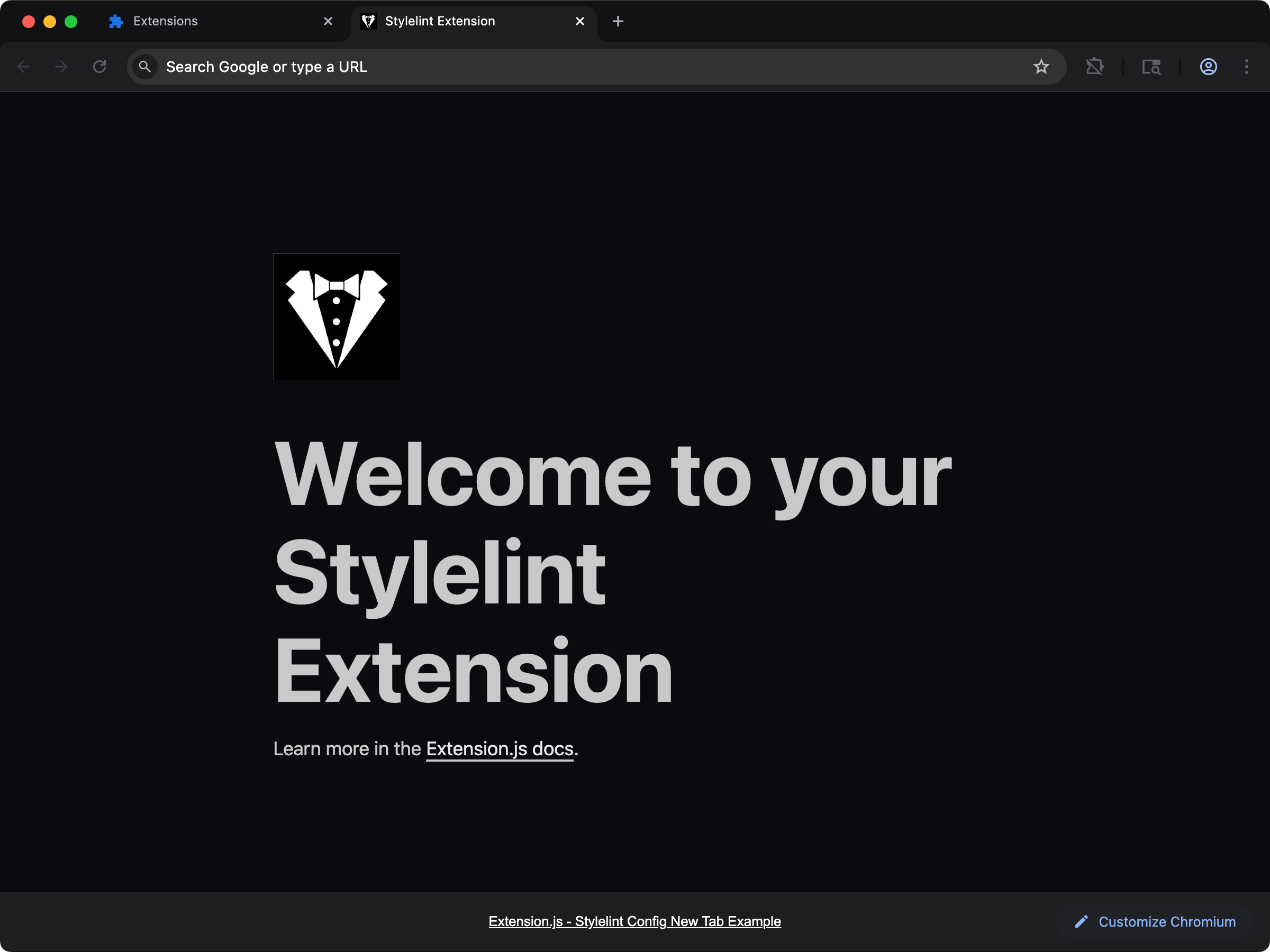
Usage with an existing extension
Install Stylelint dependencies:Stylelint configuration
Create a Stylelint configuration file at the project root (for example,.stylelintrc.json):
Run Stylelint
Integration with Prettier
Integrate Stylelint with Prettier to format and lint your styles together. Install the following dependencies:.stylelintrc.json file to include Prettier:
Best practices
- Keep a dedicated
lint:stylescommand and run it in CI. - Use one shared configuration across extension packages in monorepos.
- Pair Stylelint and Prettier so style formatting stays deterministic.
Detection notes
Extension.js does not read Stylelint configuration and does not inject Stylelint into the build pipeline. Run Stylelint yourself through your own scripts.Next steps
- Learn how to integrate Prettier into your formatting workflow.
- Configure PostCSS for stylesheet transforms.